

A museum visit does not have to cover every display. Choose one object and give it enough attention to become a story you can remember afterward. This approach works especially well when your group has different attention spans or a limited amount of time.
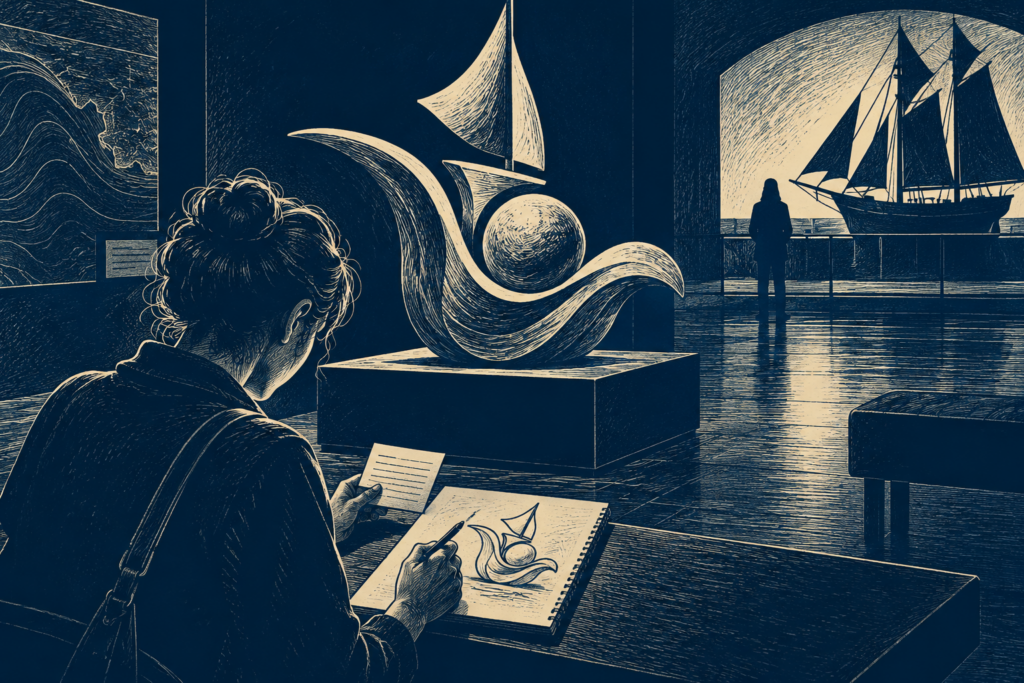
Start with the Puget Sound Navy Museum’s official website for current visitor information and exhibitions. Check its access information before travelling; a saved third-party listing may not reflect a temporary change. The illustration accompanying this article is a conceptual museum scene, not a photograph of a current exhibit.
Use three observations and one question
When an object catches your attention, record three details: what it was used for, who used it and what the display actually says about its history. Then add one question that the label does not answer. Keep quotations clearly marked and include the object’s displayed name in your notes.
For a family visit, let each person choose a different detail. One might notice a material, another a date and another a job described in the label. Comparing these observations gives everyone a role without turning the visit into a race to finish a worksheet.
Leave with a source trail
Follow posted photography rules and avoid capturing other visitors unnecessarily. If photography is restricted, a written description is enough. Afterward, use the museum’s own resources to investigate the unanswered question and separate those findings from anything you only guessed during the visit.
The result can be a short journal entry: the object, the three supported observations and the next question. It is a practical way to turn an outing into a conversation rather than a folder of unidentified pictures.
Related reading: Planning a First Visit to the Naval Undersea Museum in Keyport.
Turn the notes into a short, supported story
Write four lines after the visit: object name as displayed, one documented use, one observed detail and one unanswered question. Keep any quotation separate from your wording. If a date is missing, leave it unknown rather than importing a date from a similar object online. This is still useful when photography was prohibited. A later official collection resource may resolve the question; the goal is one traceable story rather than a complete museum history.
Chickasha demonstrates a related method for separating archive descriptions from observations. Explore Grady County History Through a Digital Archive.